If your ride is mostly pavement, bike lanes and a daily commute, the spec sheet that matters most isn't top speed — it's range consistency, weight you can actually carry up a stoop, and a motor that gets you moving from a stop without drama.
We compared every electric bike and trike in our catalog suited to commuting on real numbers: battery capacity, motor torque, curb weight and price-to-spec ratio. Below is our current shortlist, followed by what actually separates a good city e-bike from a mediocre one — including when a stability-focused trike is worth considering over a two-wheeler.
Our shortlist
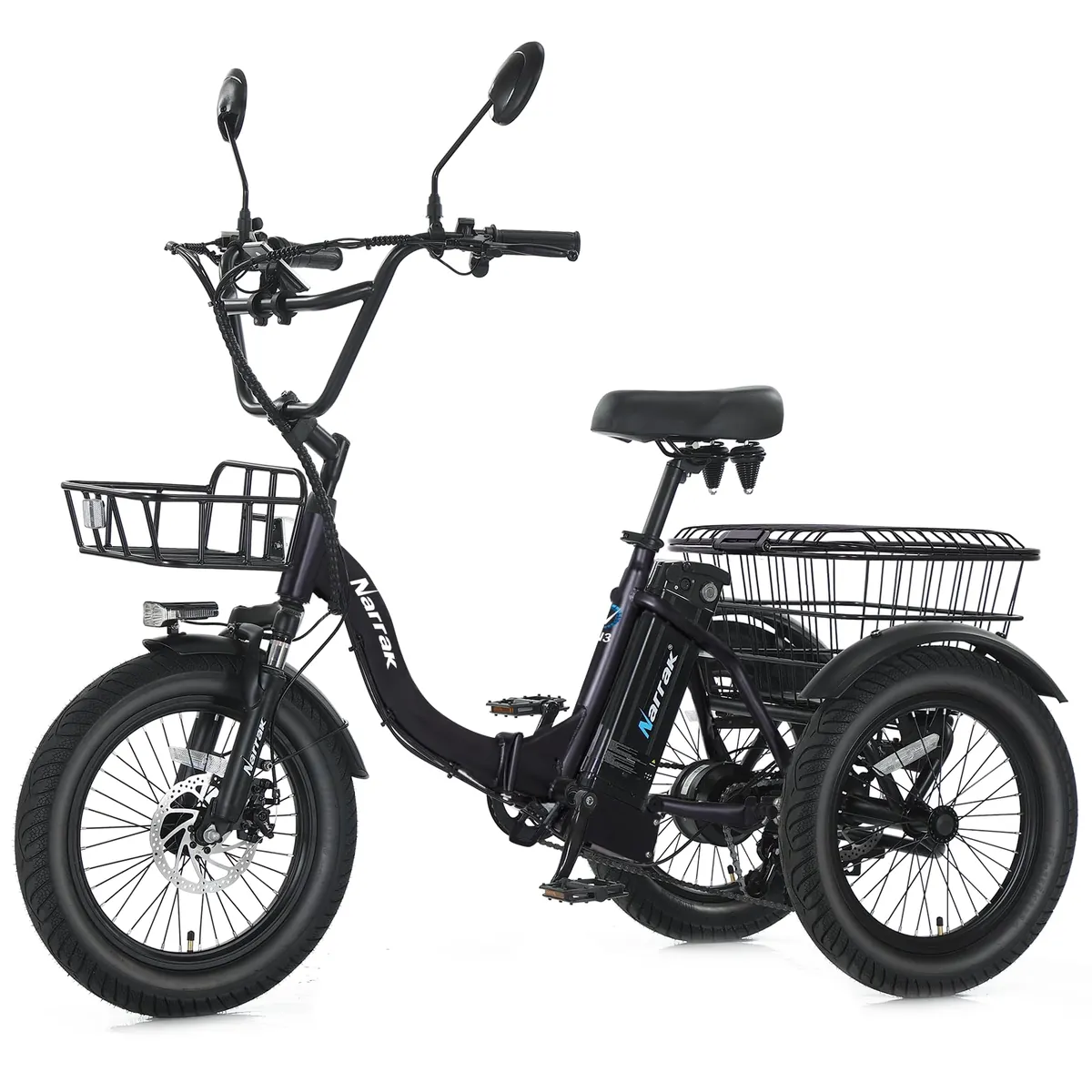
NARRAK Electric Tricycle for Adults,18" x 3.0 Fat Tire Folding Electric Trike,3 Wheels…
Riders who want a genuinely rideable trike — real pedaling and gearing, not just an electric scooter — with the flexibility to switch between modes.
View price on Amazon Full review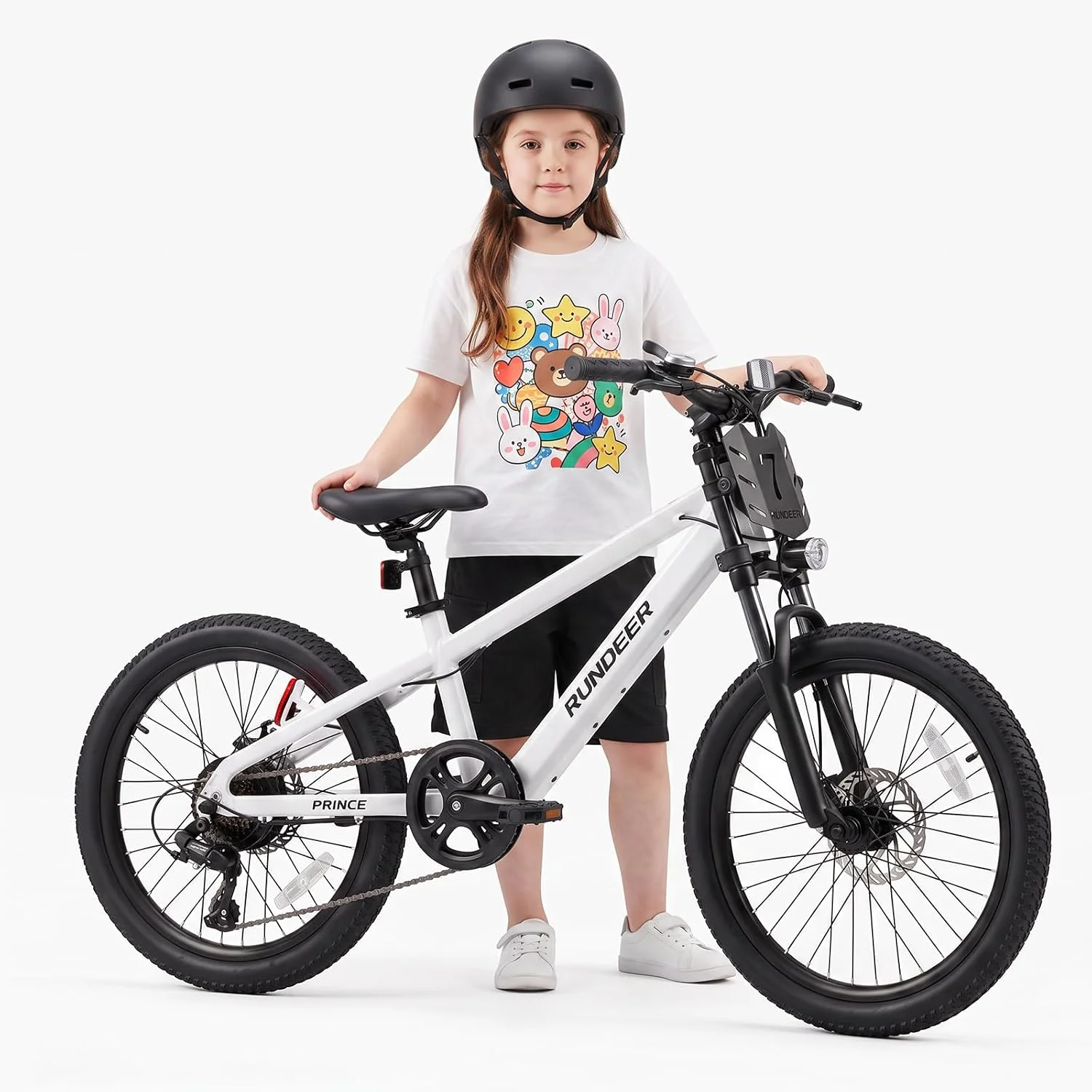
Electric Bike for Kids Age 6-13, 20MPH Kids Ebike with 2849 Certified
Three switchable speed caps make this the most learner-friendly electric kids bike in the catalog.
View price on Amazon Full review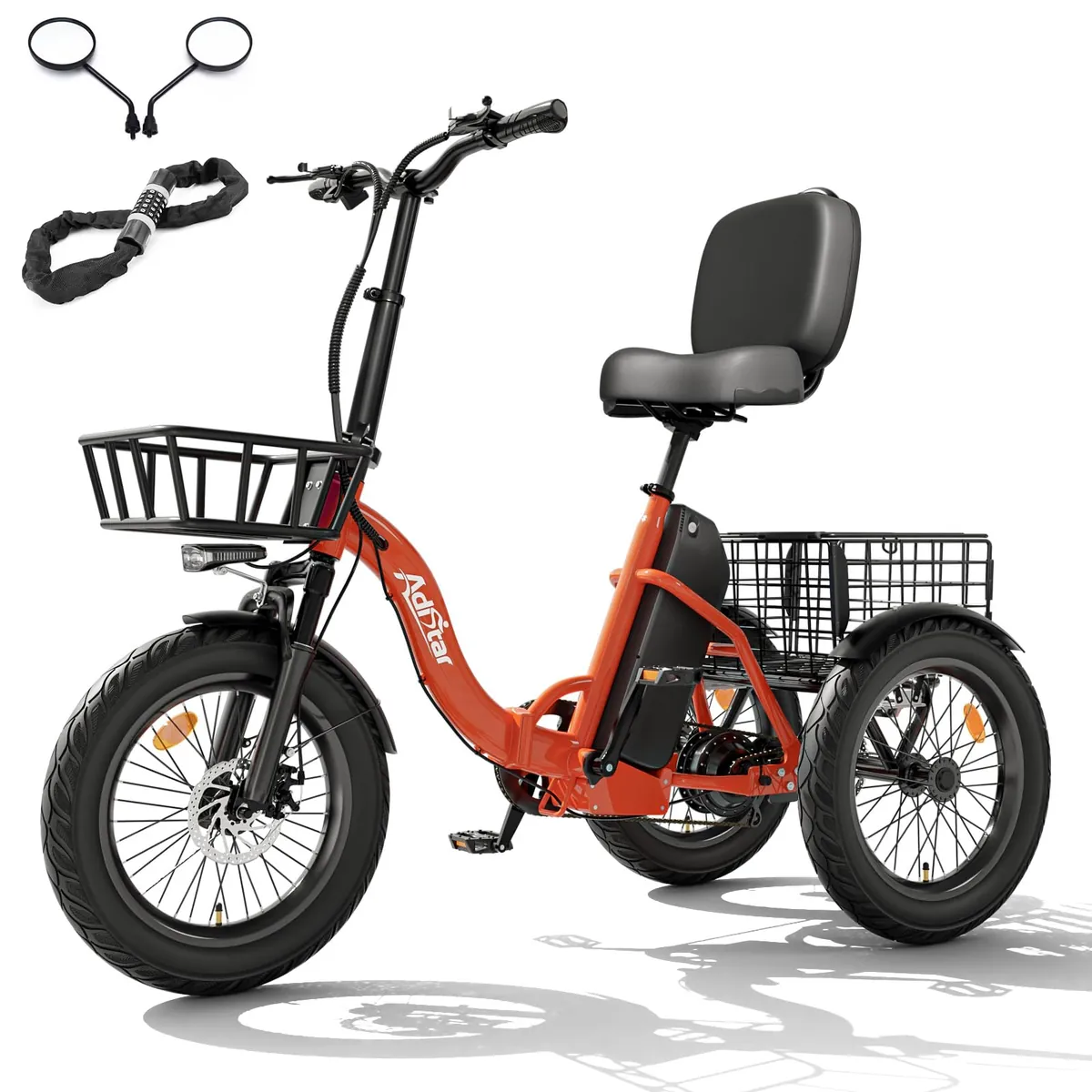
ADISTAR Electric Trike for Adults, 70 Miles Range, 48V 15.6Ah,18MPH
Built specifically for hauling, with a parking brake for loading cargo safely.
View price on Amazon Full review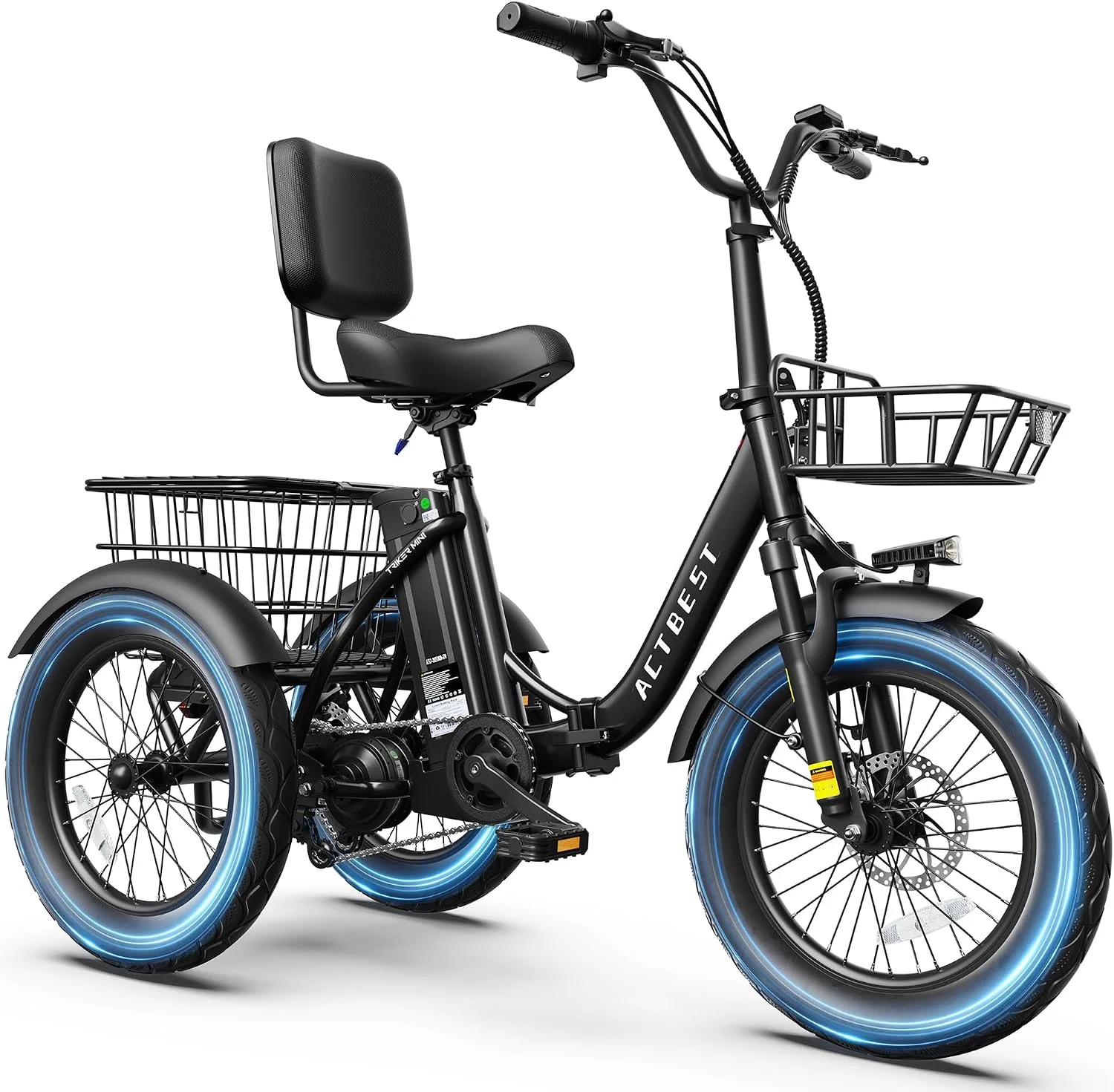
ACTBEST Electric Tricycle with Peak 1200W Brushless Motor, 48V 624Wh Removable Battery Electric Trike, Foldable & Portable E Trike, 55 Miles Max Range, Up to 18MPH 3 Wheel Ebike for Adults
One of the few folding trikes in the catalog, combining stability with real portability.
View price on Amazon Full review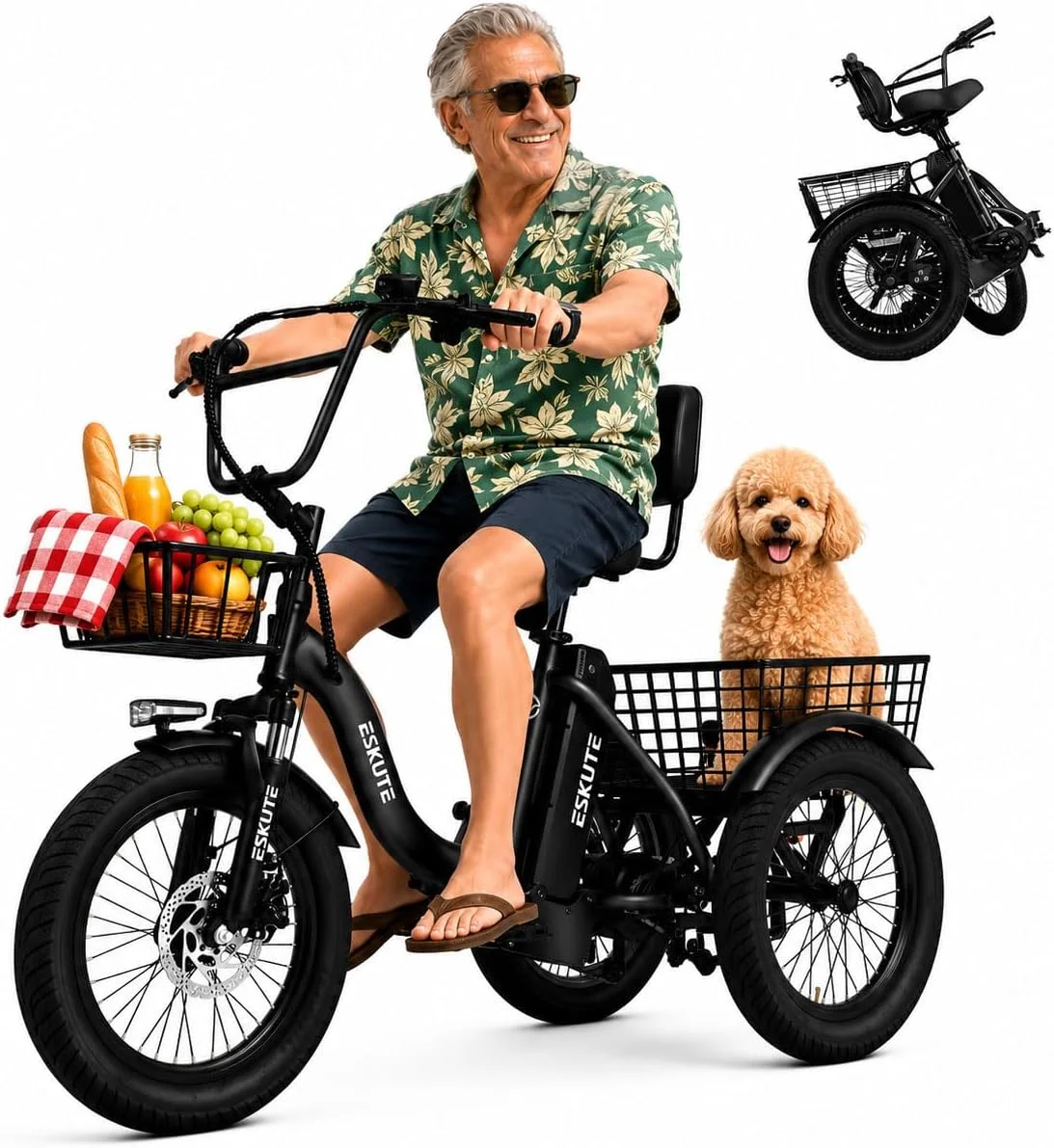
ESKUTE Electric Tricycle Bike, Peak 1200W Brushless Motor Folding Trike 18 x 3.0 Fat Tire Ebike, 624Wh Battery, Step-Thru 3 Wheel Electric Bicycle, Up to 65 Miles & 18 MPH Tricycle for Adults
The longest-range folding trike in the catalog at up to 65 miles per charge.
View price on Amazon Full reviewWhat actually matters for a commuter e-bike
Range that survives a real commute. Manufacturer range figures are measured under ideal conditions — flat ground, lowest assist, light rider. Budget for 60-70% of the claimed number on a hilly or stop-and-go commute.
Torque over top speed. City riding is full of stops. A motor with more torque (measured in Nm) gets you back to cruising speed faster at every light, which matters more day to day than a few extra mph of top speed.
Total weight, including you carrying it. If you're hauling the bike up stairs or into an apartment, every pound counts more than it does on a garage-parked bike.
Motor placement: hub vs. mid-drive
Rear-hub motors are simpler, cheaper to maintain and plenty for flat commutes. Mid-drive motors put power through the bike's own gears, so they climb better and feel more natural — worth the extra cost if your commute has real hills.
Frequently asked questions
How much range do I actually need for commuting?
Add up your round-trip commute distance and multiply by 1.5 for a safety margin against wind, hills, and colder weather (batteries lose some capacity in the cold). Most riders are comfortable with 20-30 miles of real-world range.
Is a removable battery worth it?
Yes, if you don't have secure parking for the bike itself — you can bring the battery inside to charge and to keep it out of sight, which also protects it from temperature extremes.
Do I need suspension for city riding?
Front suspension smooths out potholes and curbs, but adds weight and cost. If your commute is mostly smooth pavement, it's a nice-to-have rather than a requirement.