Most mountain bikes at this price point live or die on three things: how much suspension travel they actually give you, whether the brakes are disc or the weaker linear-pull/V-brake style, and how wide a gear range the drivetrain covers for climbs.
We compared every mountain bike in our catalog on those numbers rather than marketing copy. Below is our current shortlist, plus what actually separates a good budget mountain bike from a mediocre one. (We're adding electric mountain bikes to this category as we expand the catalog — check back, or browse our current electric picks in the meantime.)
Our shortlist
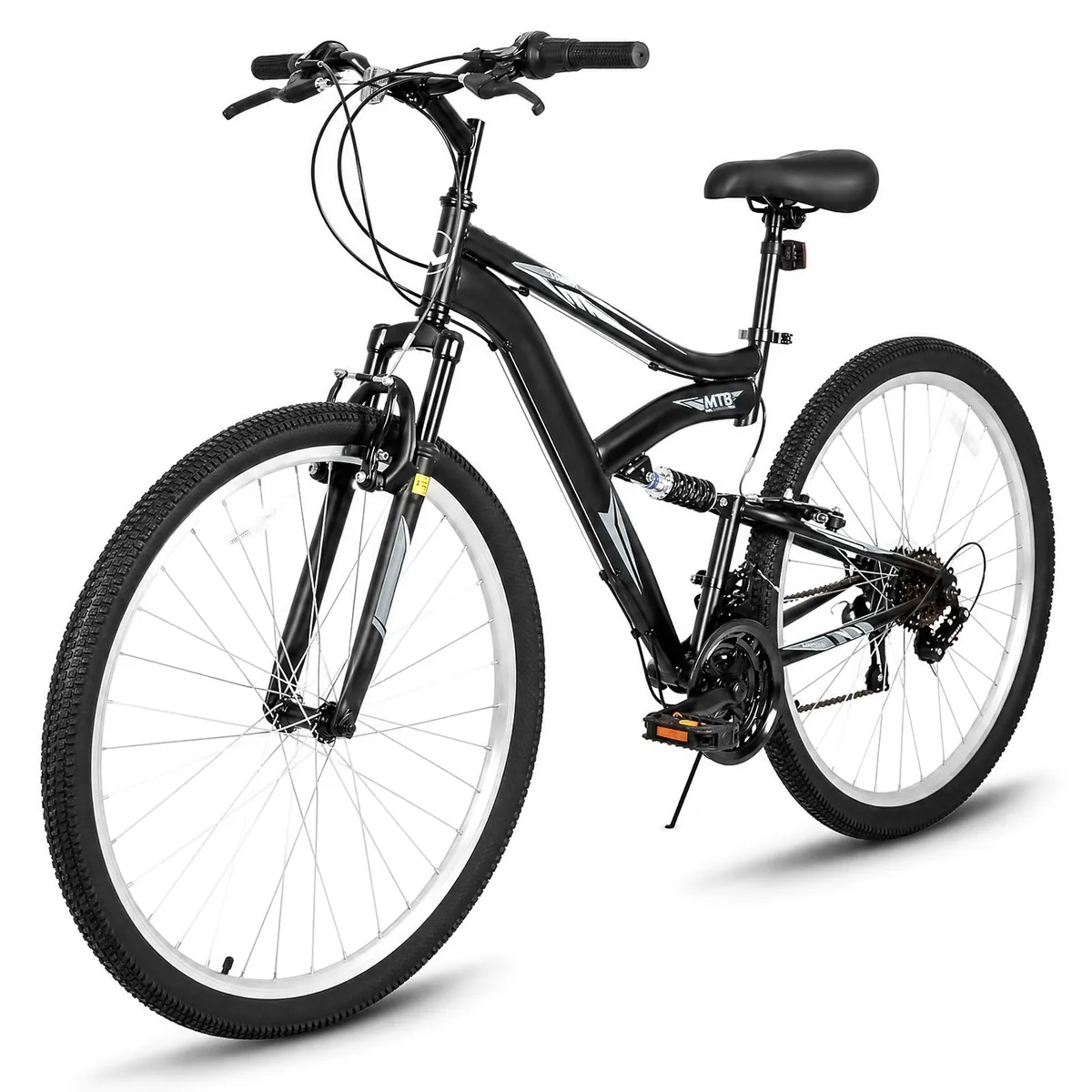
Mountain Bike 24 26 27.5 Inch MTB Sport Bicycle for Adult Men Women
Gift buyers and budget-focused riders who want full suspension and multiple size options without disc-brake pricing.
View price on Amazon Full review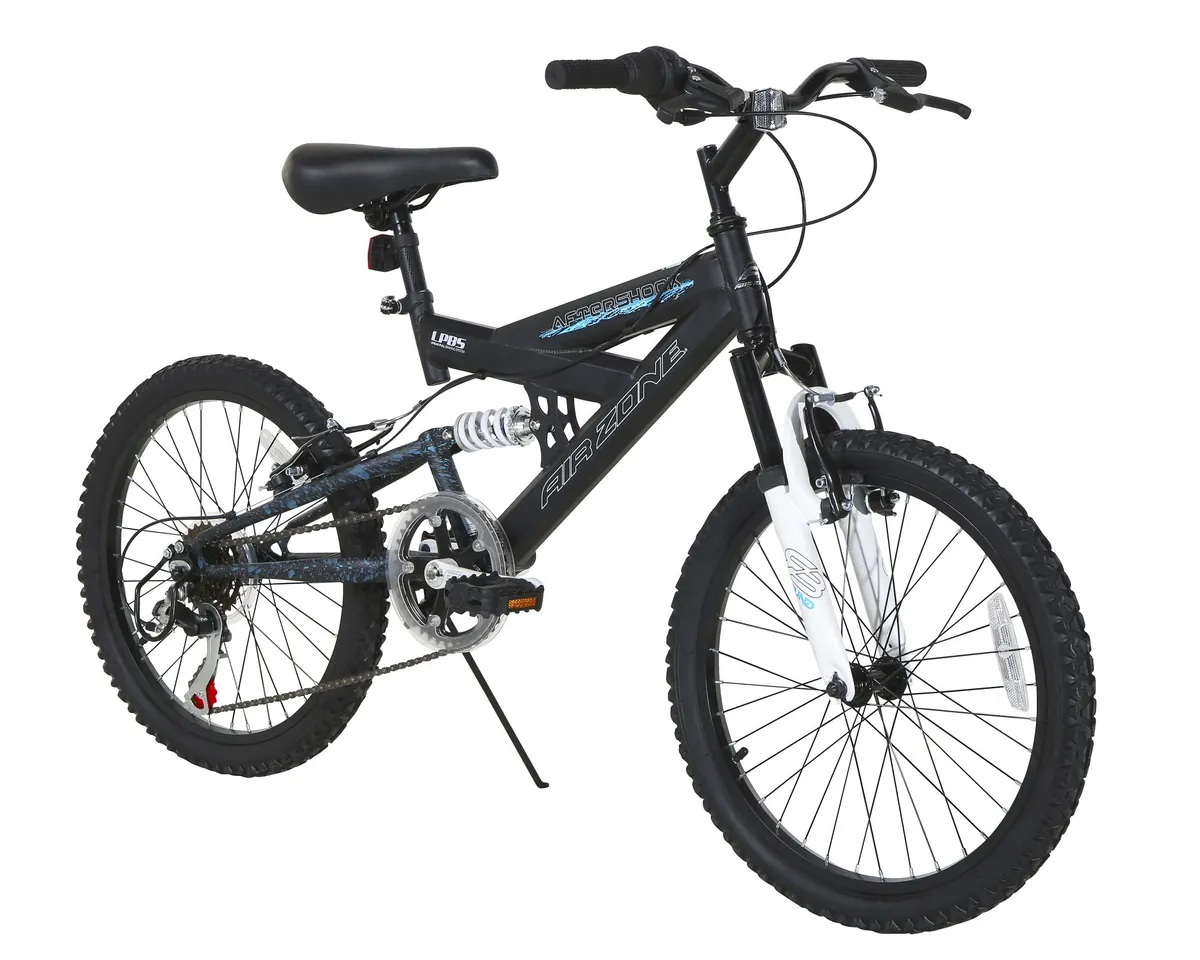
Air Zone Aftershock 20" Bike
Parents buying for a younger rider who want real suspension and gearing rather than a single-speed kids' bike.
View price on Amazon Full review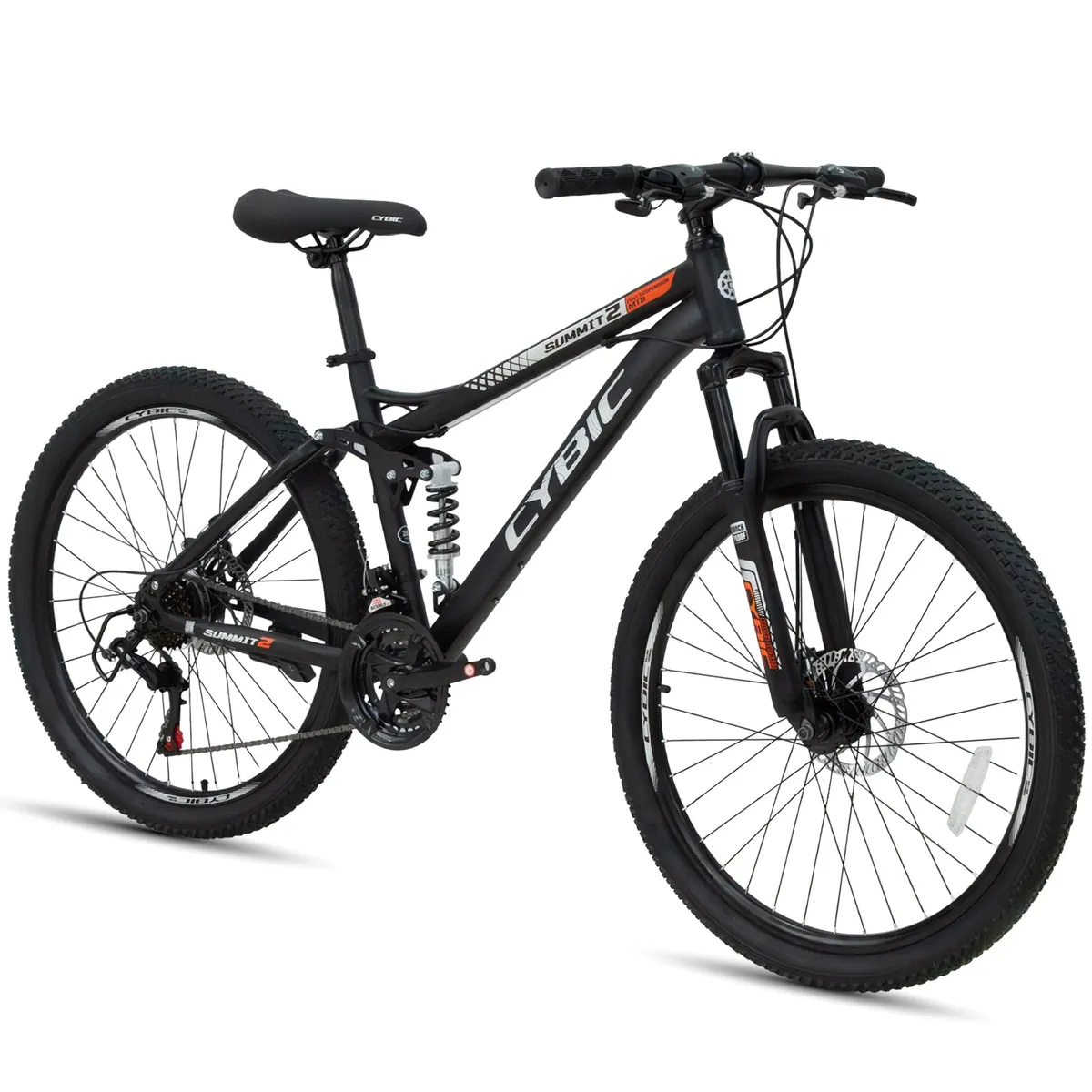
CYBIC 26" Full Suspension Mountain Bike for Adults 21 Speed Shimano
One of only a few bikes here running a full Shimano 3x7 drivetrain.
View price on Amazon Full review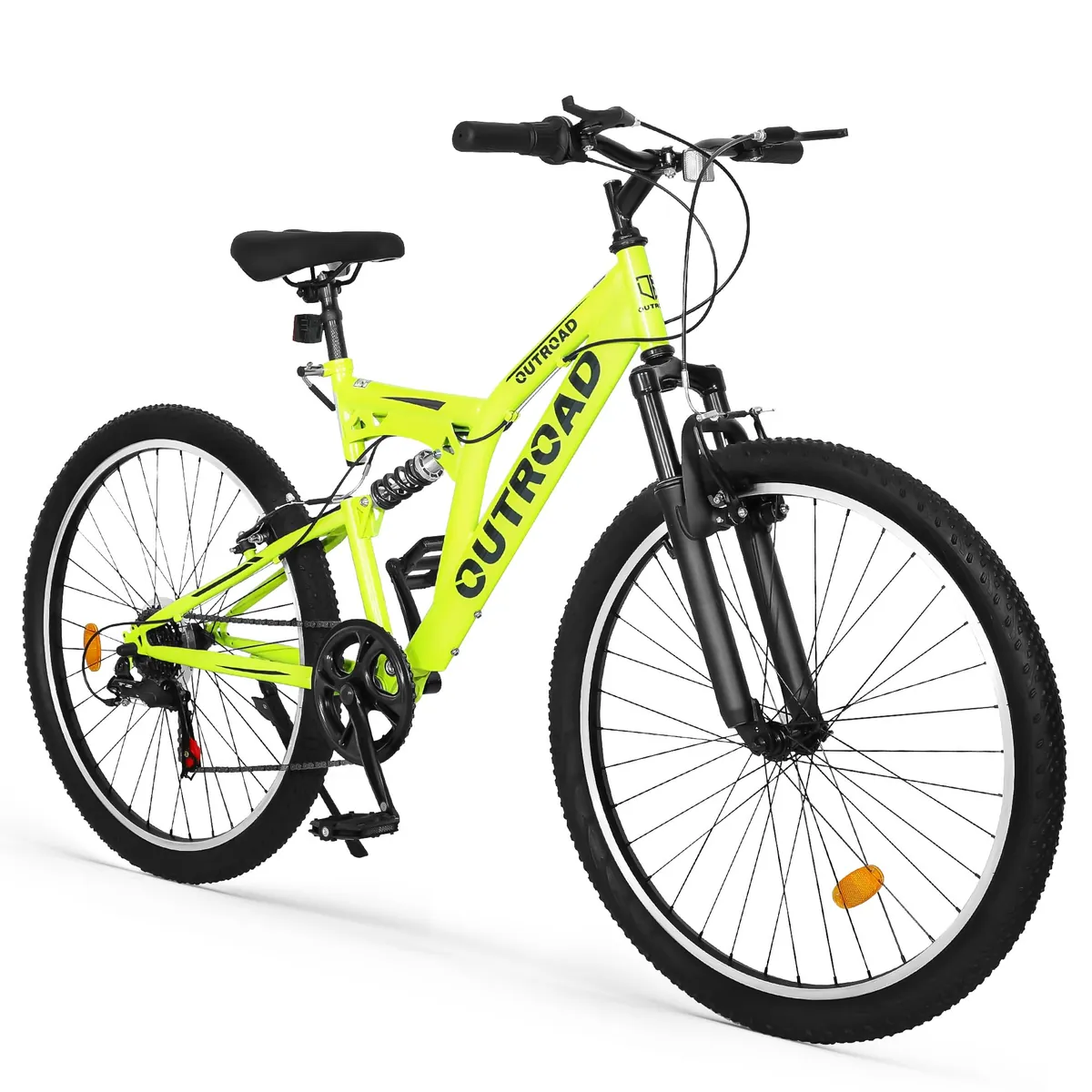
Max4out 26 inch Mountain Bike Dual Full Suspension, Outdoor Hybrid…
The lowest price in the catalog — and still comes with full suspension.
View price on Amazon Full review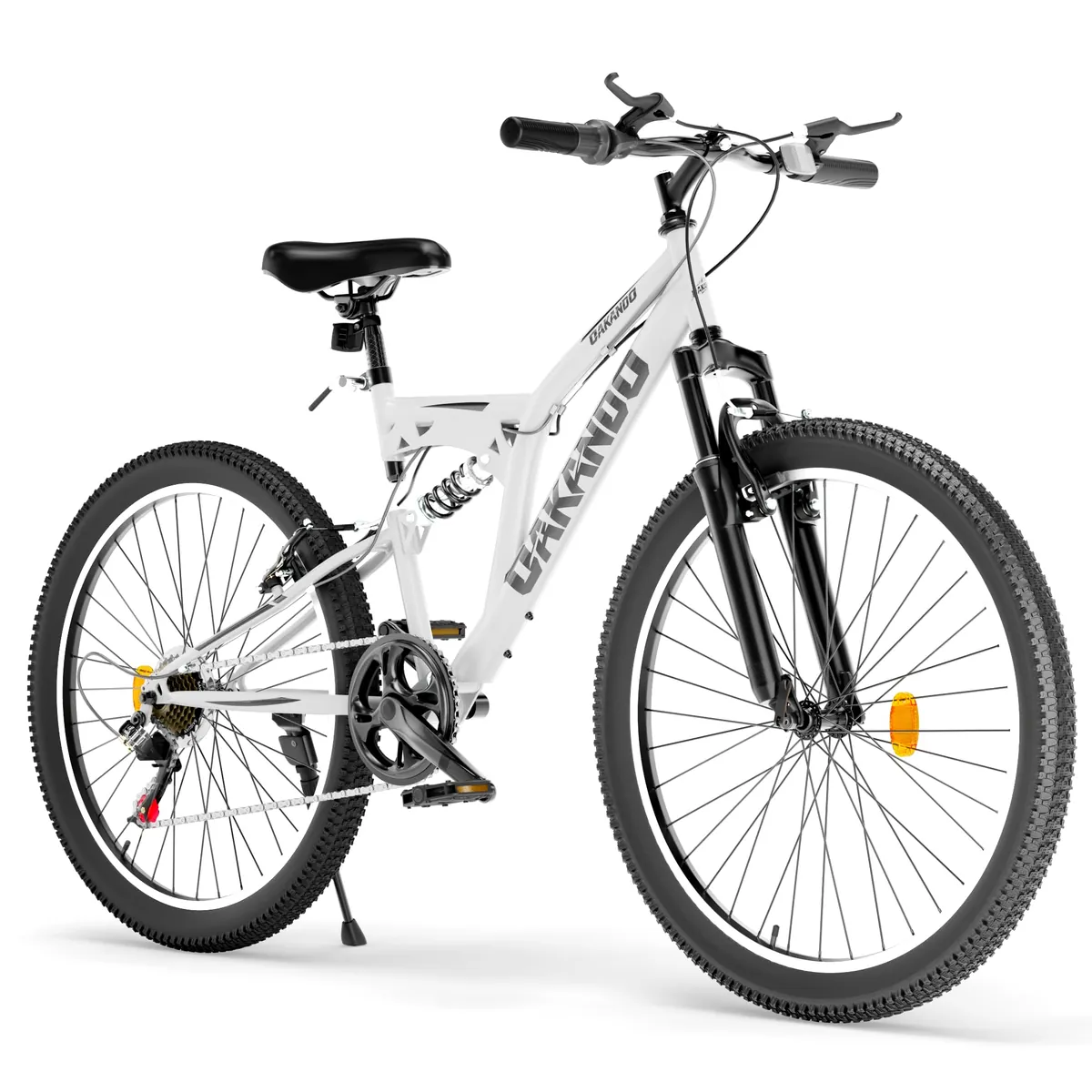
26 Inch Mountain Bike, 7 Speeds Full Suspension Bikes,High Carbon Steel Frame, Dual V…
Budget riders who want full suspension for casual trail and commuting use.
View price on Amazon Full reviewFull suspension vs. front-only vs. rigid
Full (front + rear) suspension smooths out roots, rocks and drop-offs but adds weight and cost. Front-only suspension is the sweet spot for most casual trail riders — it handles the bulk of bumps without the extra weight of a rear shock. Rigid (no suspension) is lightest and lowest-maintenance, best if you're mostly on smoother trails or pavement.
Disc brakes vs. V-brakes
Disc brakes (mechanical or hydraulic) stop more consistently in wet or muddy conditions and don't wear down your wheel rim over time. V-brakes (linear-pull) are lighter and cheaper but lose power when wet — a real consideration if you ride in rain or creek crossings.
Frequently asked questions
Do I need a steel or aluminum frame?
Steel is heavier but cheaper and more forgiving of impacts (it flexes rather than cracking). Aluminum is lighter for the same price tier but slightly less forgiving on hard hits — a reasonable trade either way for casual trail riding.
How many gears do I actually need?
For casual trail and neighborhood riding, 7-8 speeds cover almost every situation. 18-21 speeds give finer control on steep, sustained climbs but add drivetrain complexity to maintain.
Is a full-suspension bike worth it under $250?
At this price, full suspension usually means a basic coil shock rather than an adjustable air shock — it takes the edge off bumps but won't perform like a $1,000+ trail bike. Still worthwhile for comfort on rough terrain, just don't expect enthusiast-level tuning.